Introduction
Among Japanese pickles, nukazuke holds a special place as a deeply traditional fermented food.
Nukazuke is known for its rich fermentation process and strong connection to daily home cooking. Eaten in small amounts, it quietly supports digestion as part of an ordinary Japanese meal.
What Is Nukazuke?
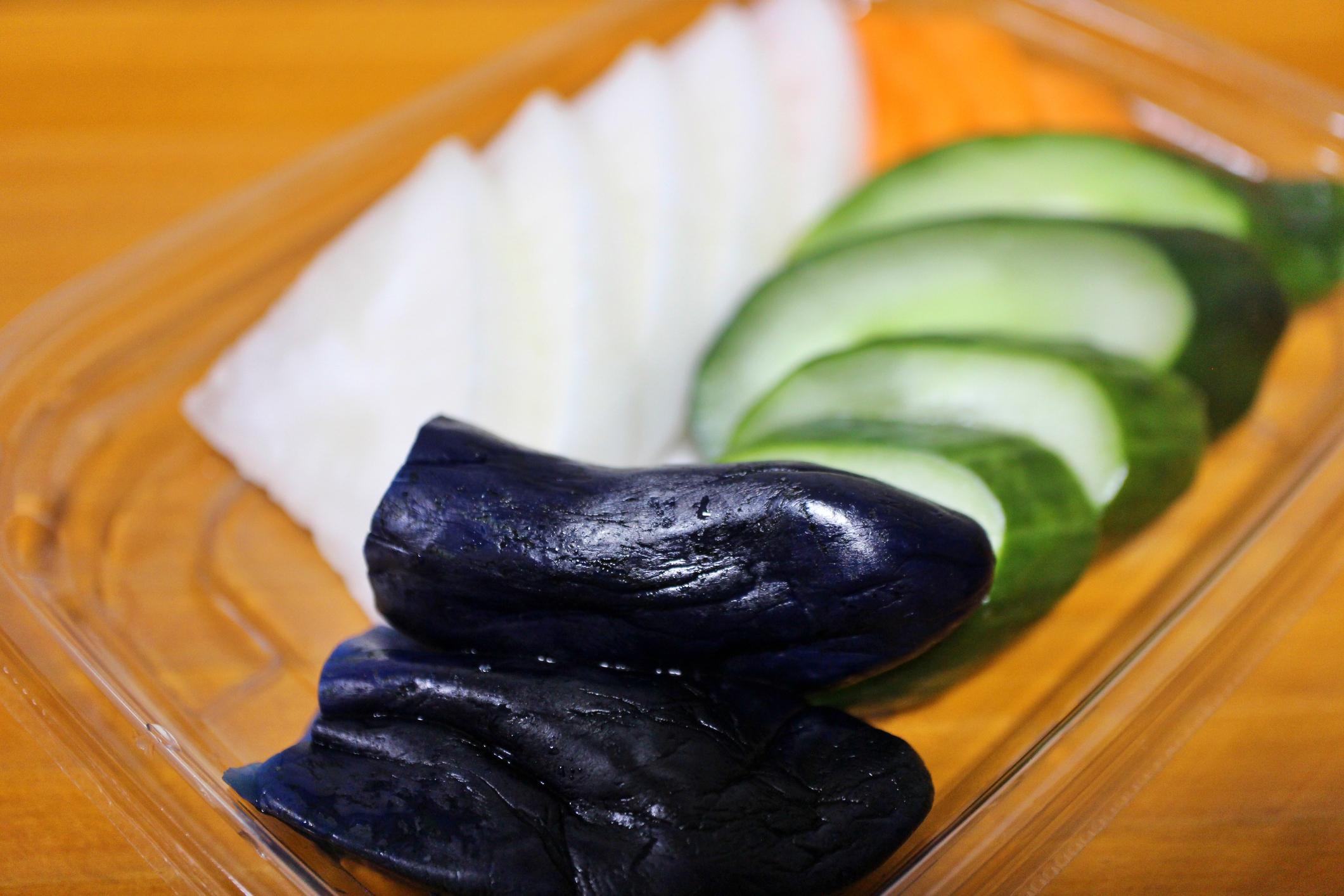
Nukazuke is a type of Japanese pickle made by fermenting vegetables in rice bran (nuka).
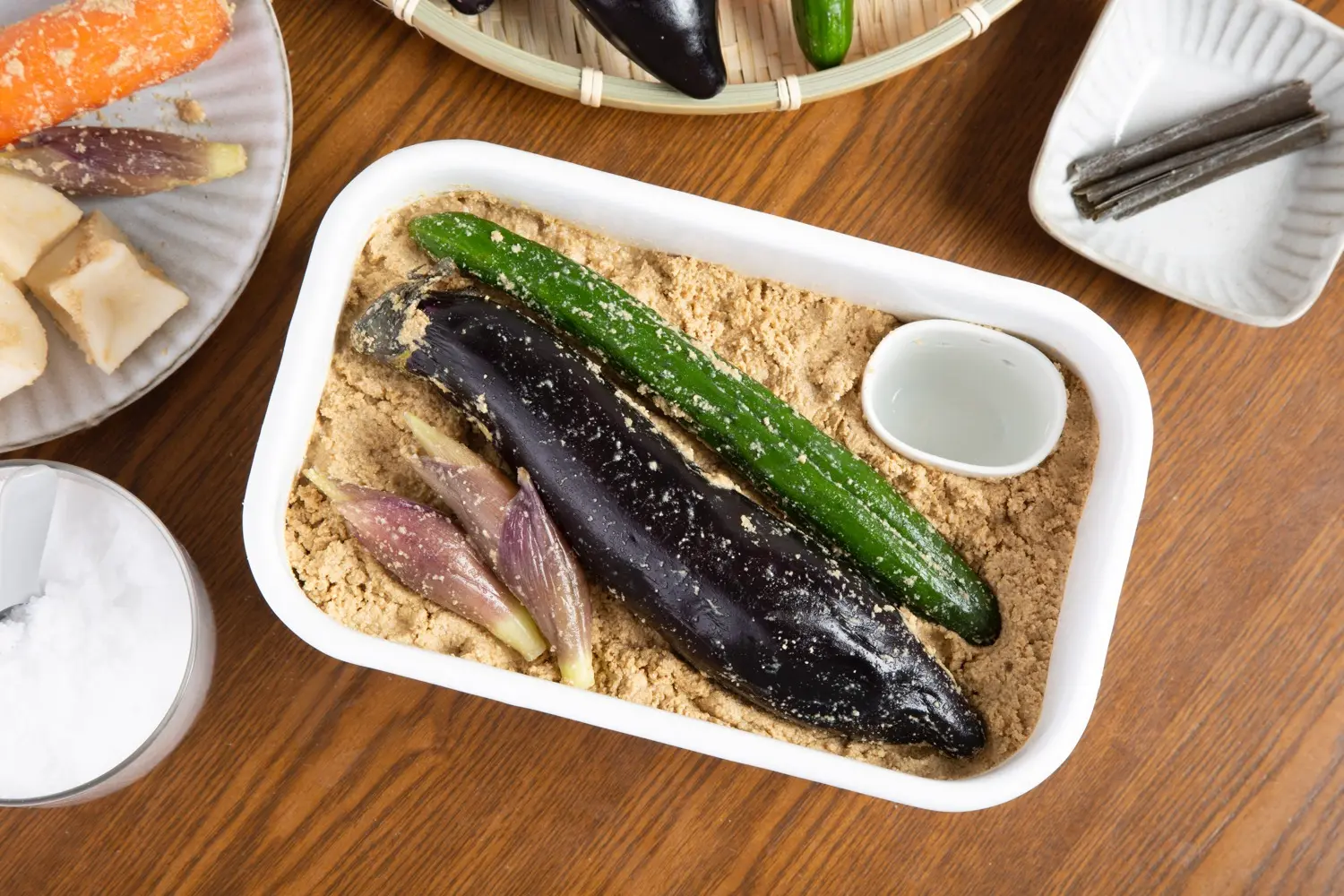
Vegetables such as cucumber, daikon radish, carrot, and eggplant are buried in a moist rice bran bed. Over time, natural fermentation occurs, creating a complex flavor and soft texture.
Unlike lightly pickled tsukemono, nukazuke relies on ongoing fermentation and daily care.
Why Nukazuke Supports Gut Health
Nukazuke supports gut health through natural fermentation.
During fermentation:
- Beneficial bacteria develop in the rice bran bed
- Vegetables become easier to digest
- Fermented flavors stimulate digestive activity
- The gut benefits from gentle, naturally fermented foods
Because nukazuke is eaten in small portions, it supports digestion without overwhelming the digestive system. Its effects come from consistency rather than strength.

Free Guide:
5 Japanese Foods for a Healthier Gut
A simple, illustrated starter guide to miso, natto, and more — download free.
How Japanese People Traditionally Eat Nukazuke
In Japan, nukazuke is commonly eaten as part of everyday meals.
It is traditionally eaten:
- As a small side dish with rice and miso soup
- In very small portions
- As part of home-cooked meals rather than restaurant dishes
- Prepared and maintained at home over long periods
Nukazuke is valued not for intensity, but for balance and daily use.
How to Prepare or Use Nukazuke at Home
Today, nukazuke can be prepared at home with simple ingredients, though it requires regular care.
Ingredients
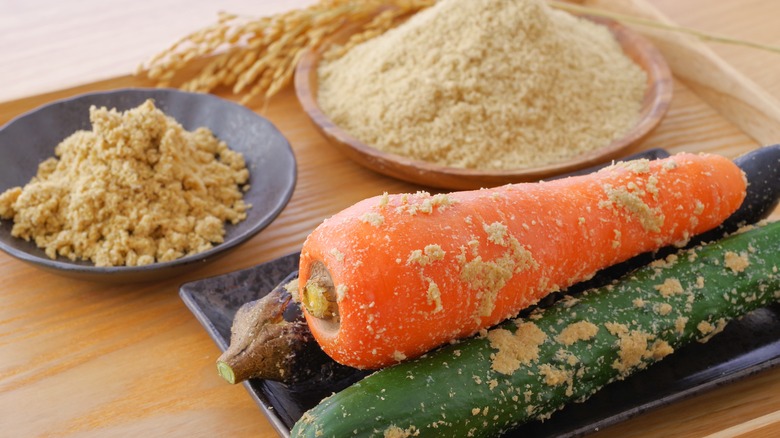
- Rice bran (nuka)
- Salt
- Water
- Fresh vegetables (cucumber, daikon, carrot, eggplant)
Steps
- Mix rice bran, salt, and water to create a moist fermentation bed.
- Place the mixture in a clean container.
- Bury washed vegetables fully in the rice bran.
- Leave at room temperature and mix the bed daily.
- After one to several days, remove the vegetables.
- Wipe off excess bran and slice before eating.
Conclusion
Nukazuke is a traditional fermented food that supports gut health through steady, natural fermentation.
Rather than offering quick results, nukazuke works by gently supporting digestion as part of daily meals. Its value lies in small portions, consistency, and long-term care.
This approach reflects the Japanese philosophy of gut health—simple foods, patient preparation, and daily habits that quietly support balance over time.
Free Guide:
5 Japanese Foods for a Healthier Gut
A simple, illustrated starter guide to miso, natto, and more — download free.