Introduction
In Japanese cooking, many meals begin with a quiet foundation rather than strong flavors. One of the most important ingredients in this foundation is kombu, a type of dried sea vegetable.
Kombu is not eaten in large amounts. Instead, it is used to create broth and gentle flavors that support digestion and balance meals.
What Is Kombu?
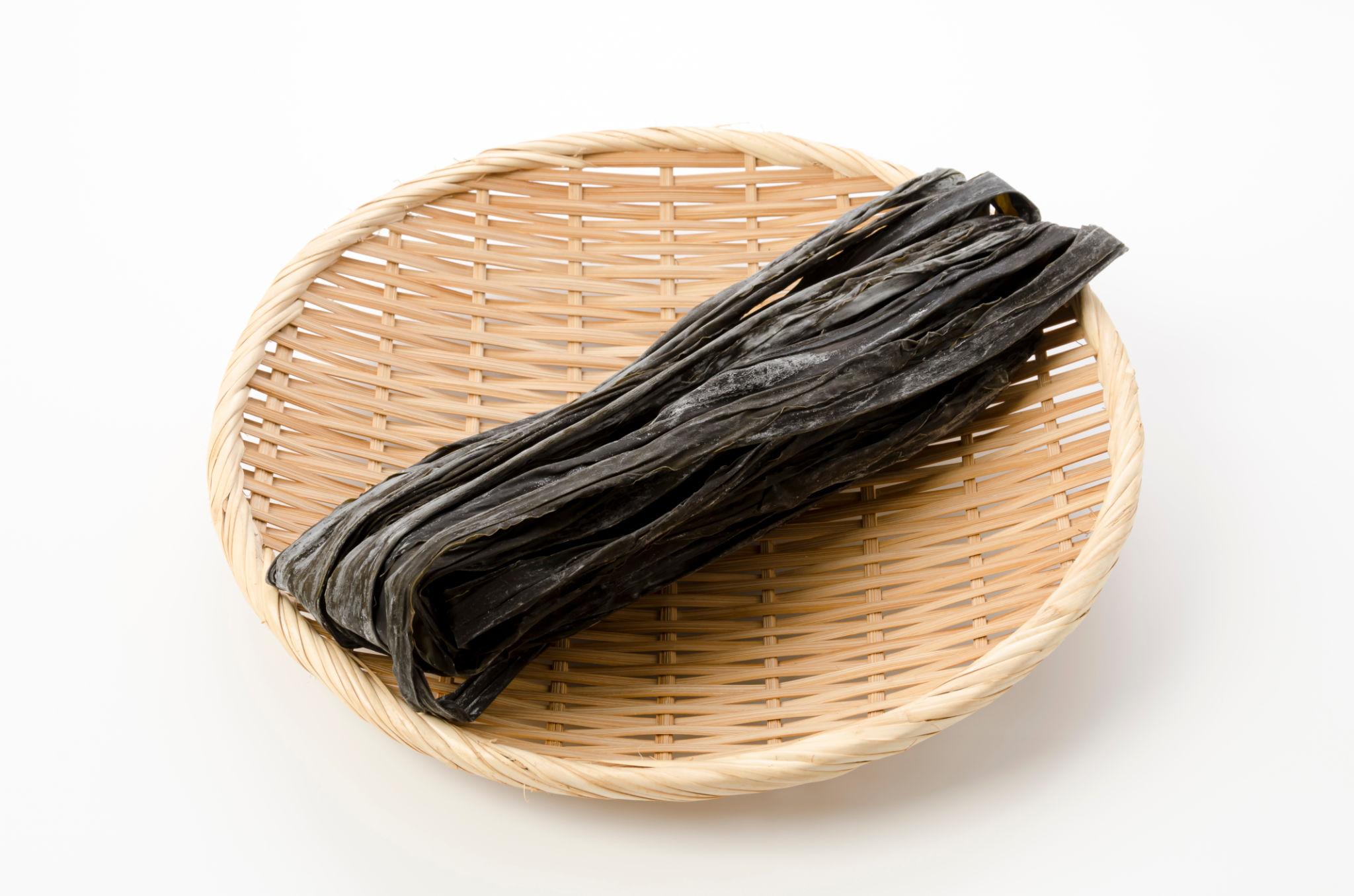
Kombu is a dried edible kelp harvested from cold coastal waters, mainly in northern Japan.
After harvesting, kombu is dried slowly. This drying process concentrates natural umami compounds. Kombu is most commonly used to make dashi, the base broth for many Japanese dishes.
Rather than being a main ingredient, kombu works quietly in the background to support flavor and digestion.
Why Kombu Supports Gut Health
Kombu supports gut health through its natural composition and gentle use.
Kombu contains:
- Natural umami compounds that enhance flavor without heaviness
- Minerals that support overall balance
- Soluble fiber that can gently support digestion
Because kombu is usually used in broth rather than eaten directly, it adds nourishment without stressing the digestive system. This makes it suitable for daily meals and recovery foods.

Free Guide:
5 Japanese Foods for a Healthier Gut
A simple, illustrated starter guide to miso, natto, and more — download free.
How Japanese People Traditionally Use Kombu
In Japan, kombu is used as a base rather than a topping.
It is traditionally used:
- To make dashi broth
- In soups such as miso soup
- With vegetables and tofu
- As part of simple, balanced meals
Kombu is rarely the focus of attention. Its role is to support other ingredients and help meals feel complete and easy to digest.
How to Prepare or Use Kombu at Home
Today, kombu can be easily used at home to prepare simple broth.
Ingredients
- Dried kombu
- Water
Steps
- Wipe the surface of the kombu gently with a dry cloth.
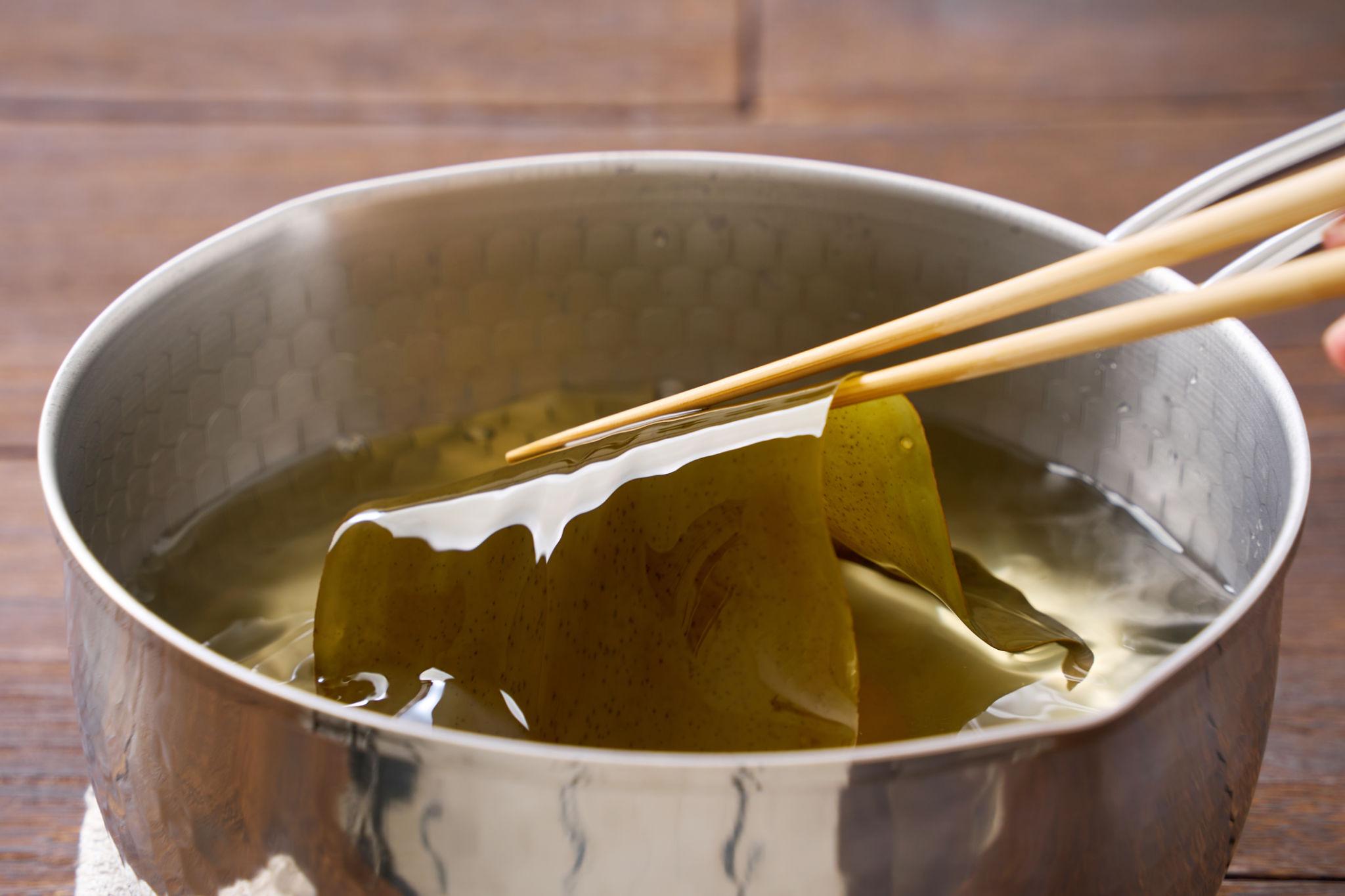
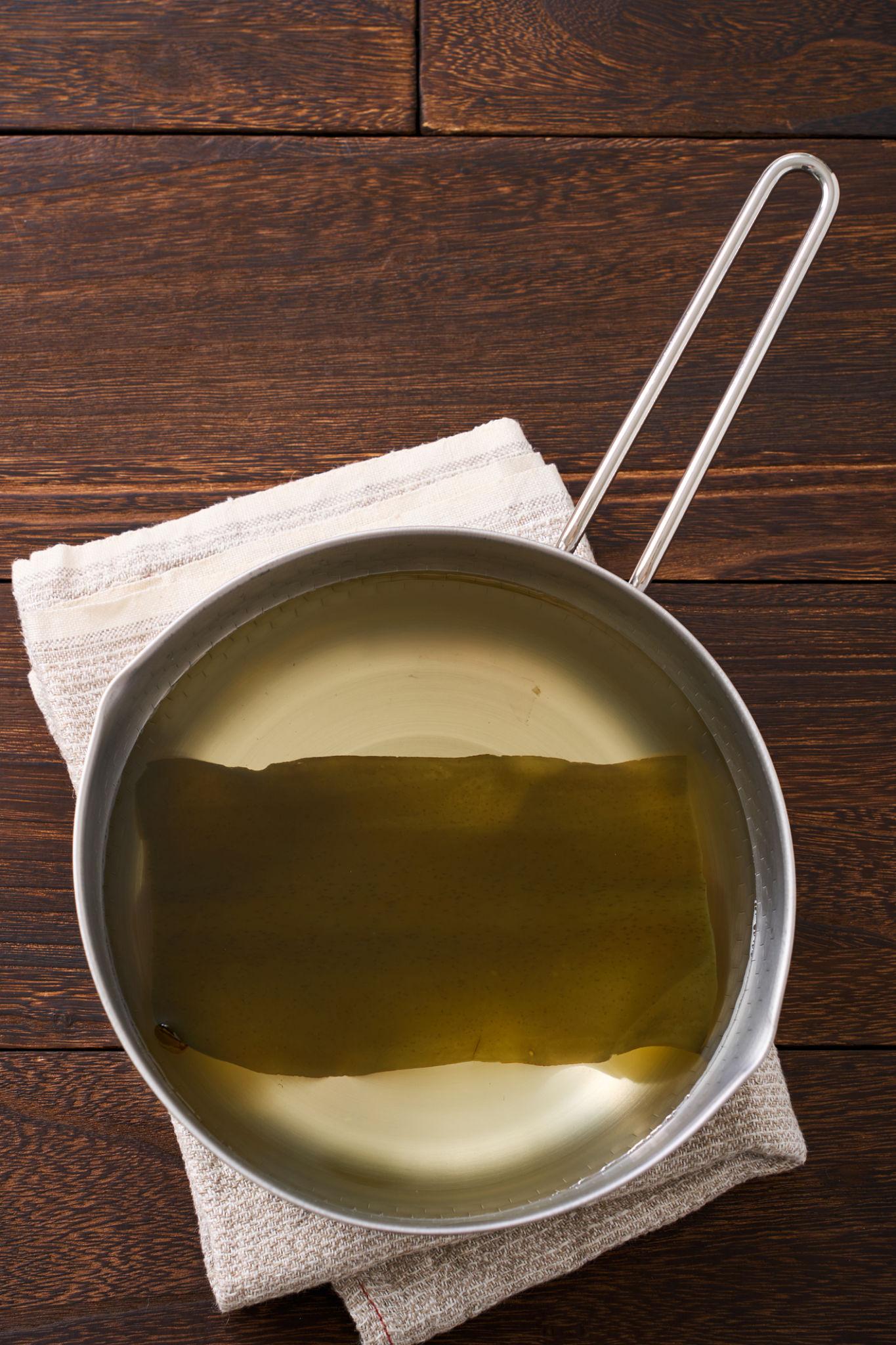
- Place kombu in cold water and let it soak for several hours.
- Heat the water slowly and remove the kombu before boiling.
- Use the kombu-infused water as a base for soups or cooking.
This method keeps the flavor gentle and balanced.
Conclusion
Kombu supports digestion not by standing out, but by forming a calm foundation for meals.
By creating gentle broth and natural umami, kombu allows other foods to be enjoyed without heaviness. Its quiet role reflects the Japanese approach to gut health—building balance from the base rather than relying on strong or direct effects.
Used regularly, kombu becomes part of a steady, digestible way of eating that supports gut health over time.
Free Guide:
5 Japanese Foods for a Healthier Gut
A simple, illustrated starter guide to miso, natto, and more — download free.